When should I change my Subaru brake fluid in Prescott?
Your brakes work harder on Prescott's grades, and so does the fluid. We'll show you the simple signs it's time, so you're never caught guessing.
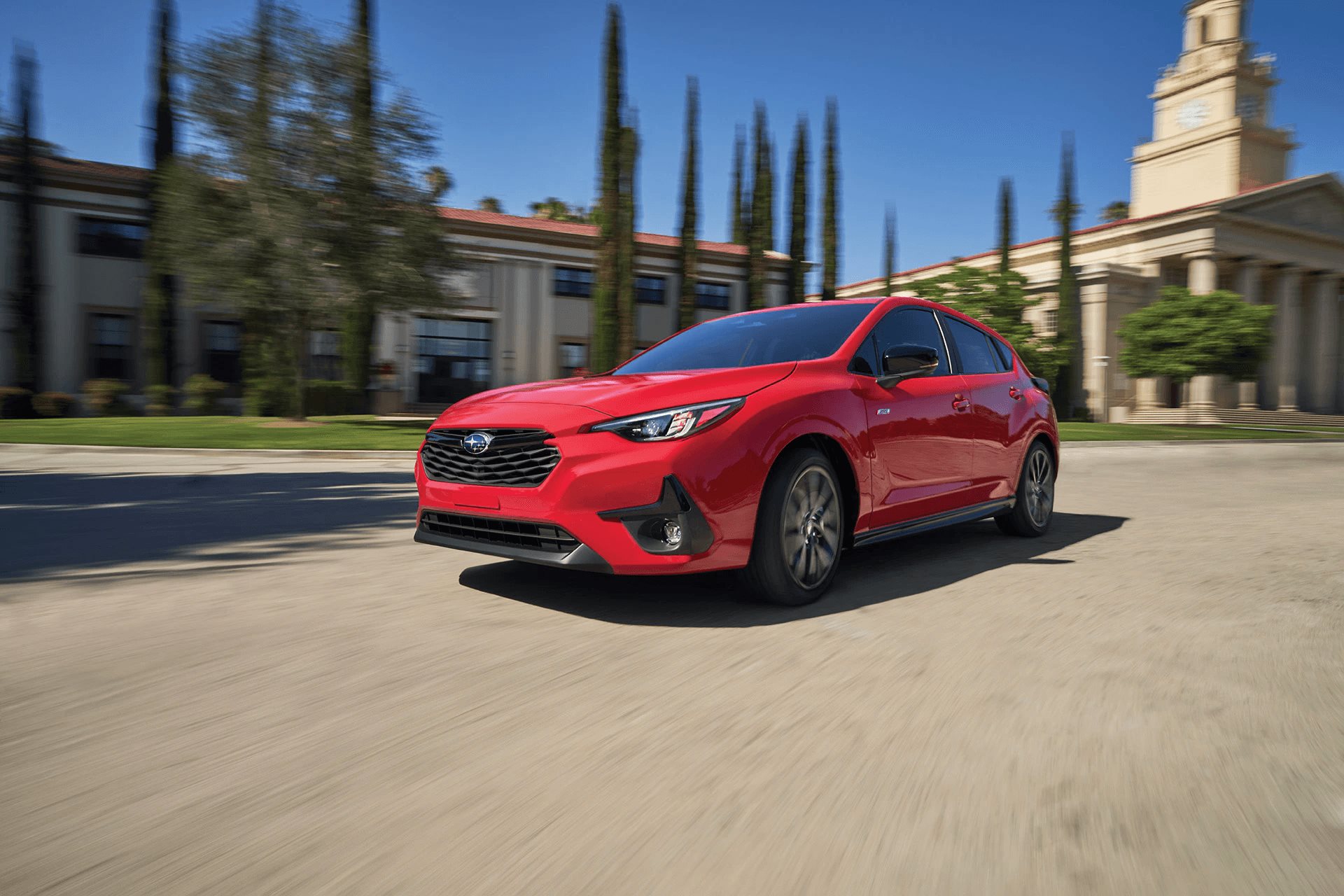
Brake fluid is the quietest safety system on your Subaru.
Subaru recommends replacing brake fluid about every 30,000 miles or three years; your owner's manual has the exact interval for your model and year. The fluid absorbs moisture over time. That drops its boiling point, and the pedal goes soft under heavy or sustained braking.
Whether you drive a Forester, Outback, Crosstrek, Ascent, or an EV like the Solterra, Trailseeker, or Uncharted through the Quad Cities, here is how brake fluid ages and what a real service does about it, plus the signs worth catching early.
Ask most people about their brakes and they'll talk about pads and rotors, the parts you can hear when they go. Almost nobody thinks about the fluid. That's the trouble: by the time you feel it in the pedal, it's been slipping for a while.
What brake fluid does
The fluid is hydraulic. Step on the pedal and it's the fluid that clamps the calipers onto the rotors. It's also hygroscopic, which is a fancy way of saying it pulls water out of the air over time. That water is the whole problem. Here's how it goes wrong:
- Fresh fluid stays firm under heat. Press the pedal, the pressure goes straight to the calipers.
- Years pass and it soaks up water. Water boils at a much lower temperature than brake fluid does.
- The water turns to vapor. Vapor squishes; fluid doesn't. That's the instant a firm pedal goes soft on you, and it tends to happen on a long downhill, right when you're leaning on the brakes.
The numbers make it real. Fresh DOT 3 fluid boils at roughly 401°F when it is dry. After a couple of years of pulling in moisture, that boiling point can fall toward 284°F. On a long descent off Mingus Mountain or down toward the Verde Valley, the brakes can push fluid temperatures into that range, and the gap between 401 and 284 is the difference between a firm pedal and one that sinks to the floor.
What Subaru calls for
For most current models, Subaru spec's a non-petroleum DOT 3 fluid, swapped on a schedule rather than whenever something feels off. Your exact figure is in your owner documentation, and we check it against your model before we quote a flush. We're not guessing at it.
We measure the fluid. We don't guess.
Something most shops won't mention: even a sealed bottle goes bad. A two-year-old container sitting on a shelf can be near the water limit the day it gets opened. So it's not just your car's age that matters. It's how the fluid was handled before it ever reached your reservoir.
We learned that one the hard way last winter. A tech put a moisture meter to a sealed-but-old container, it read past the safe line, and we tossed the whole batch instead of pumping it into a customer's Outback. That's the gap between measuring the fluid and hoping it's fine.
Prescott's terrain makes this a local problem
Brake fluid wears out on every car. Around Prescott it wears out faster, because the driving is harder on it. We sit at 5,400 feet, and the roads you actually drive put real heat into the brakes: the grades down toward the Verde Valley, the run along AZ-89A toward Prescott Valley and Sedona, and the long descents off the rim. Even close to home it adds up — the steep pitch of Prescott Lakes Parkway and the short, repeated stops of around-town driving work your brakes far more than flat-highway miles do.
Sustained downhill braking is exactly the scenario where water-contaminated fluid fails. The heat builds, the moisture in the fluid boils, and the pedal goes long right when you need it most.
According to the National Highway Traffic Safety Administration, brake-system maintenance is foundational to vehicle safety, and degraded hydraulic performance contributes to preventable braking incidents. We have inspected enough high-mileage Foresters and Outbacks off these grades to take it seriously.
How to tell your brake fluid is due.
Watch for a soft or low pedal, fade on long downhills, a brake warning light, or dark, cloudy fluid in the reservoir. Past three years or roughly 30,000 miles, plan a flush regardless of feel.
A few signs are worth knowing before the pedal ever changes:
- A soft, spongy, or low-feeling brake pedal.
- Brakes that fade or feel less responsive on long downhill stretches.
- A brake warning light on the dash.
- Dark, cloudy, or dirty-looking fluid in the reservoir. Fresh fluid is nearly clear with a light amber tint.
- More than three years or roughly 30,000 miles since your last flush.
If any of these sound familiar, have the system checked. Most drivers don't notice the change until the pedal already feels off, and by then a flush is overdue. The mileage and the calendar are better guides than your foot.
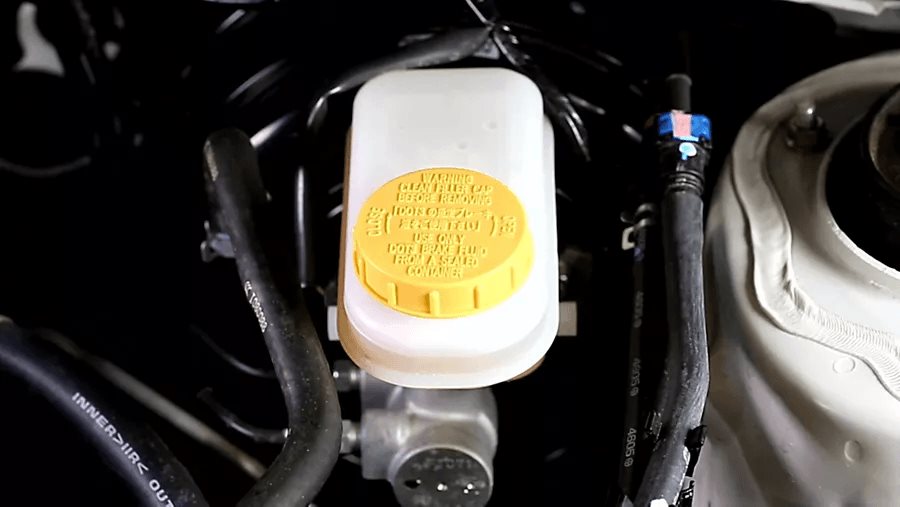
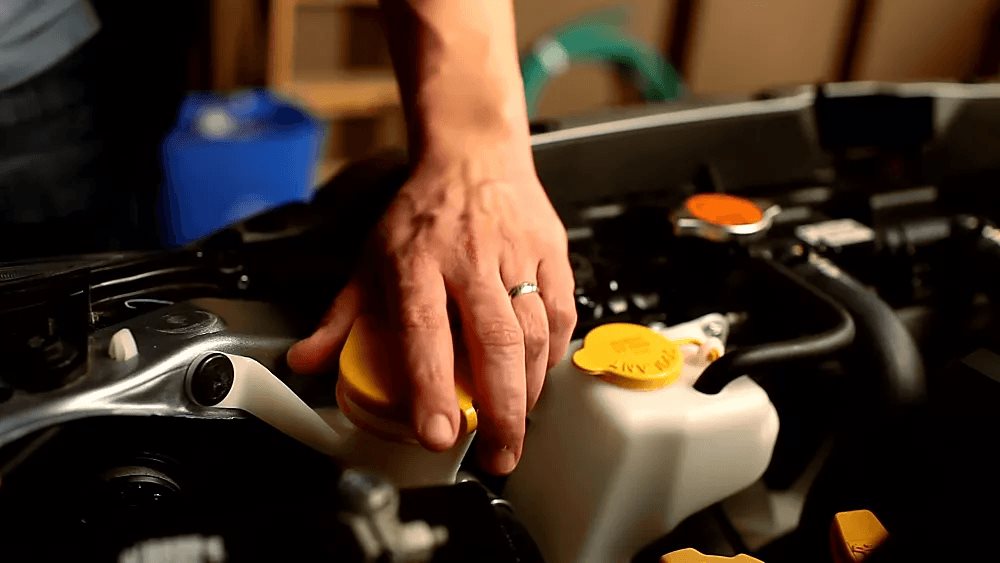
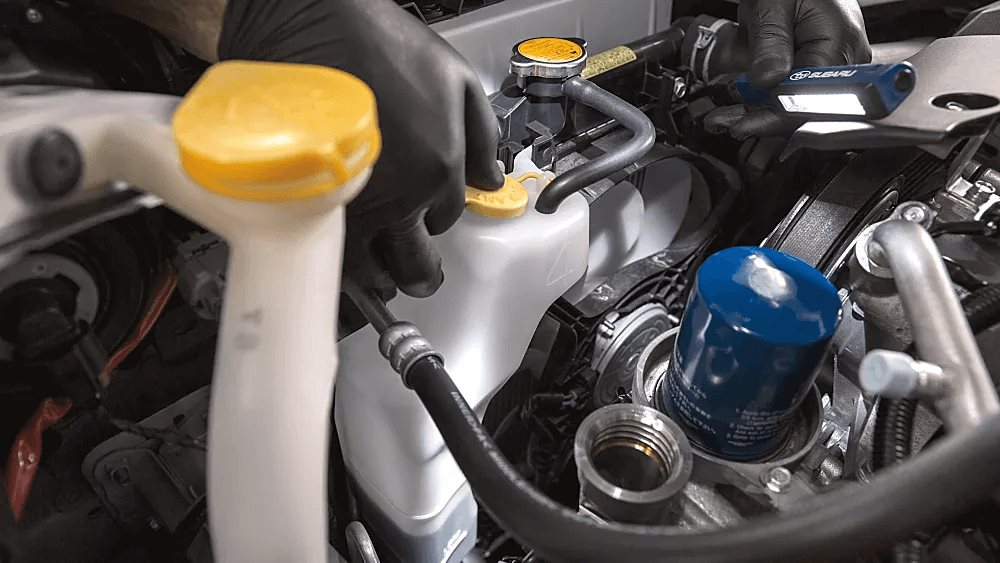
A real Subaru brake service is more than fluid.
Brake fluid is one piece of a complete system. A proper service flushes the fluid and then goes through the rest: pads and rotors measured, calipers and hardware checked, lines and hoses inspected, so nothing expensive sneaks up on you.
Brake fluid is one piece of a complete system, and our service team looks at all of it. A few weeks ago a Crosstrek came in for what the owner assumed was just a fluid flush.
Our technicians measured the front pads at the wear limit and found a glazed rotor on the right front. They replaced both pads and rotors before the metal-on-metal stage that would have cost far more. The fluid flush was the easy part. Catching the rest was the value.
When you bring your Subaru in, the inspection typically covers:
- Brake fluid flush. Draining old, moisture-laden fluid, refilling with the correct Subaru-spec DOT 3 fluid, then bleeding each corner to push every trace of contaminated fluid out of the lines.
- Pads and rotors. Measuring pad thickness against Subaru's wear spec and checking rotors for scoring, warping, glazing, and uneven wear.
- Calipers and hardware. Confirming the calipers slide freely and seat correctly, since a sticky caliper cooks fluid and chews pads unevenly.
- Brake lines and hoses. Inspecting for leaks, cracks, soft spots, and corrosion.
- A documented overall inspection. The kind of careful, no-surprises check our customers consistently mention in reviews.
The Solterra, Trailseeker, and Uncharted are good examples
Our electric models — the Solterra, the Trailseeker, and the Uncharted — lean heavily on regenerative braking, so the friction brakes get used far less in normal driving. That is good news for pad wear. But friction brakes that rarely get used can develop surface rust and uneven bedding, and the fluid still ages on the calendar whether you use the pedal or not.
Our service team handles the EV-specific brake needs across all three, and can walk you through the coverage on your vehicle.
Our technicians inspected a low-mileage Solterra this spring, found lightly rusted rear rotors from regen-only driving, and recommended a service drive to bed them in rather than an unnecessary parts replacement. We declined to sell parts that car did not need. That call is easier to make when nobody on the floor works on commission.
We can make that call because of how the place is set up. Our sales staff doesn't work on commission, and the pricing on every contract is published with no fees hiding in the margins.
Our customers notice. The reviews keep using the same words: they weren't pressured, nobody pushed extra work, and the inspection fixed what needed fixing and left the rest. So when an advisor tells you the fluid is due, it's because a tech measured it and the calendar agrees, not because someone's chasing a quota.
Pad life and fluid life are not the same clock.
Not every Subaru wears its brakes the same way. The heavy Ascent stresses fluid fastest, the volume Outback and Forester take real grade heat, the Crosstrek hides aging fluid behind healthy pads, and the Solterra ages fluid while barely using it.
We see the differences across the lineup every week, and knowing yours lets you plan service instead of waiting for a warning light.
| Model | What drives brake-fluid wear up here |
|---|---|
| Ascent | Heaviest in the lineup; towing and full loads on the grades stress fluid fastest. Plan a shorter interval if you tow. |
| Outback | Volume seller; real grade heat on Verde Valley and rim descents. Baseline ~30,000 mi / 3 yr, sooner with heavy downhill use. |
| Forester | Same everyday duty as the Outback; standard interval, watch the calendar on low-mileage cars. |
| Crosstrek | Light on pads, so healthy pads can hide aging fluid. Go by the calendar, not the pedal feel. |
| Solterra, Trailseeker, Uncharted (EVs) | Regenerative braking barely uses the friction brakes, so fluid ages by time and moisture, not miles. Calendar interval matters most across all three. |
| Subaru's baseline is about 30,000 miles or 3 years; your owner's manual has the exact figure for your model and year. | |
Ascent, the heaviest of the bunch
The Ascent is the three-row workhorse, and it is the heaviest vehicle in the lineup. More mass means more energy the brakes absorb on every stop. Tow a trailer or haul a full load up the grades, and an Ascent goes through pads and stresses fluid faster than a Crosstrek doing the same miles.
We measured noticeably thinner pads on a high-mileage tow-package Ascent this spring. We walked the owner through why his interval should be shorter than the baseline.
Outback and Forester, the everyday ones
The Outback and Forester are the volume models around Prescott, and they live the classic mountain-desert life. They see highway miles, grades, dirt roads, and the occasional fully loaded trip. These are the cars where the three-year fluid interval matters most, because the fluid takes real heat even when the pads look fine.
Crosstrek, the sneaky one
The Crosstrek is lighter and easier on its brakes, often the slowest in the lineup to wear pads, which can lull owners into ignoring the fluid entirely. Pads can look great at the same time the fluid has quietly aged past spec. That mismatch is exactly the trap the calendar interval is designed to catch.
Our EVs, the odd ones out
The Solterra, Trailseeker, and Uncharted are the outliers. Regenerative braking means light pad wear but normal fluid aging and the risk of surface-rusted rotors from underuse. The fix is usually driving habits and a proper bedding-in, not parts.
We have flushed cars with plenty of pad left, and replaced pads on cars whose fluid was still fine.
Pad life and fluid life run on different clocks. Treating them as one job is how owners get surprised. Bring the car in. Our techs measure the actual condition of both, and you see a clear picture before any work starts.
Seasonal brake care for the high desert
Prescott's seasons each hit the brakes differently.
Winter: moisture and rust
Cold mornings and the occasional snow on the higher routes leave moisture and grime that rust rotor surfaces, especially on a car that sits, and more so on a regen-heavy Solterra. Last fall our techs found surface rust on trade-in Foresters that had sat through a cold, damp stretch. A few firm, safe stops on your next drive scrubs most of it off.
Monsoon: the humidity window
From roughly July through September, the monsoon brings the most humid stretch Prescott sees all year. Brake fluid is hygroscopic, so it pulls moisture out of the air faster when the air is wet. If your flush is already near the calendar limit, the monsoon is the season it crosses over. Beating the monsoon, not the heat, is the better way to time an overdue flush. Standing water on Highway 69 and 89A during those storms is also the real-world test of how quickly your brakes shed water and bite again.
Summer: heat on the descents
Long downhill grades put sustained heat into the system, and that's when tired fluid shows itself. Before any summer trip into the high country, check your brake fluid the same way you'd check your tires. The descent is not where you want to find out it was overdue.
Book Subaru brake service in Prescott, walk-in or appointment.
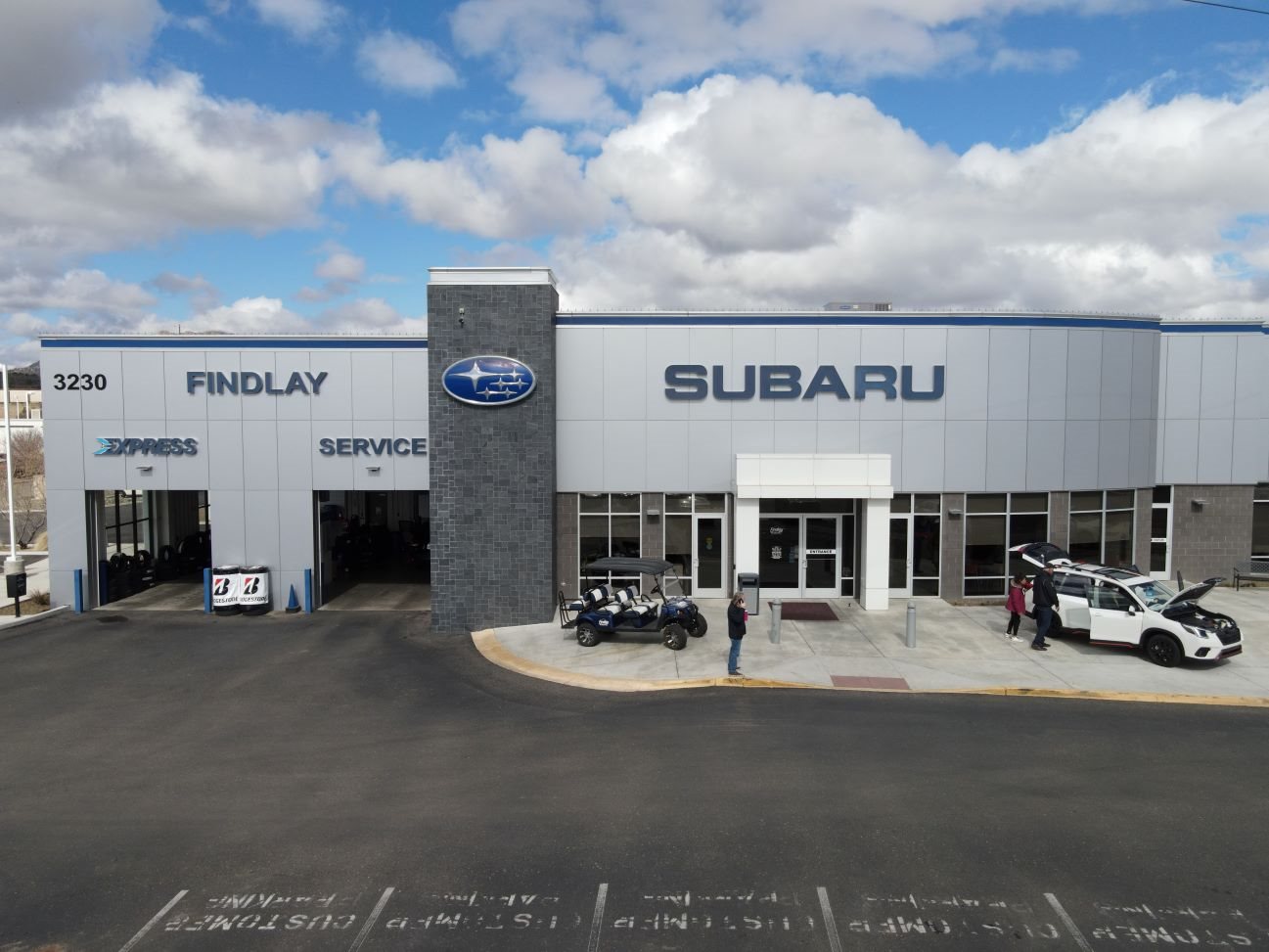
Findlay Subaru Prescott is at 3230 Willow Creek Road and rated 4.8 stars from roughly 1,705+ Google reviews. Service is open Mondays. Express handles quick checks; a full brake job goes smoother by appointment.
Booking brake service in Prescott should not be complicated, and here it is not. Findlay Subaru Prescott is located at 3230 Willow Creek Road, Prescott, AZ 86301, and carries a 4.8-star rating from approximately 1,705+ Google reviews at the time of writing.
Searching for Subaru brake service near you? We are the Subaru service center for Prescott and the surrounding Quad Cities, a short drive for owners in Prescott Valley, Chino Valley, Dewey-Humboldt, and across Yavapai County. Full service runs Monday through Friday, with Express walk-ins on Saturday too, and yes, we're open Mondays.
On the go? No appointment needed. A two-person Express team handles a brake-fluid check, tire rotation, and a multi-point inspection in one quick visit. Here is the part most people miss: we text you a short multi-point inspection video of your own Subaru, so you can see what the technician saw. Watch for that text and tap the link, and that walkthrough video is how you know exactly how your car is doing. A full brake service is the one job we book ahead.
You leave knowing how your Subaru is doing.
Your Express Service representative reviews this easy-to-understand checklist with you after the work is done, so you are fully informed of the condition of your Subaru and its key systems every time you come through.
| Department | Hours |
|---|---|
| Service | Mon–Fri 7:00 AM – 6:00 PM; Sat 8:00 AM – 5:00 PM (Express only); Sun closed |
| Express Service | Mon 7:00 AM – 5:00 PM; Tue–Sat 8:00 AM – 5:00 PM (walk-ins stop Mon–Fri at 4:00 PM); Sun closed |
| Parts | Mon–Fri 7:00 AM – 6:00 PM; Sat 8:00 AM – 5:00 PM; Sun closed |
A few practical notes from the people who run the lane:
- Express Service handles quick jobs. A brake-fluid check, a fluid top-off, or a fast brake inspection often fits into Express without a long wait. Walk-ins are welcome for maintenance Monday through Saturday, with the Monday–Friday cutoff at 4:00 PM so the lane can finish before close.
- Bigger jobs go better with an appointment. A full brake job (pads, rotors, fluid, and a complete inspection) gets you in and out with less waiting if you schedule ahead. You also get a specific technician slot rather than a queue.
- The waiting area is built for it. Customers regularly mention the massage chairs and the popcorn, which makes the hour you spend on a fluid service a lot less of a chore.
- Maintenance can be part of a bigger picture. Every new Subaru sold here includes Maintain the Love: 1 year / 12,000 miles of complimentary maintenance. If you bought your Forester or Outback here, ask whether your service falls inside that window before you pay for anything.
To book, use the online service scheduler, or reach the service team through our contact page. Because our call-tracking numbers rotate, the contact page is the most reliable way to reach the right department.
Straight pricing, before any work starts.
A standard Subaru oil change runs $99.99 and a brake-fluid system service runs $149.99, both published right here. If pads or rotors come into it, we quote that after we measure, and you see the number before we touch the car.
A Subaru oil change at Findlay Subaru Prescott runs $99.99 and a full brake-fluid system service runs $149.99. We publish both instead of making you call. Coupons on the service specials page are built to meet or beat independent-shop pricing, so a dealer-level brake service rarely costs what owners expect.
If the inspection turns up pads or rotors that need work, that part depends on your model. We quote the real number after our techs measure the actual condition, and you approve it before any work begins. The price you see is the price you pay.
Current service specials
A few of the offers running now. The full, current list lives on the service specials page.
Specials change month to month, so the service specials page is always the current source of truth. And if your Subaru needs more than a special covers, you'll see the measurement and the number before anything gets done. The same straight quote, either way.
Why local owners bring their Subaru here for brakes.
You see the price before we touch the car. Factory-trained hands, Subaru-spec fluid.
The honest read
Brake fluid is the part you never think about until the pedal feels wrong. What you pay for here is a tech who measures the fluid and the pads, uses the Subaru-spec fluid, and tells you straight what your car needs. A five-time CARFAX Top-Rated Dealer, 2020 through 2024.
How we work
Non-commissioned service structure. Nobody on the floor earns more by talking you into work you do not need. The price you see is the price you pay, with no hidden fees. Subaru Loves to Care partners with City of Hope Cancer Center.
Frequently asked questions.
How often should I change my Subaru's brake fluid?
Subaru generally recommends a brake-fluid replacement about every 30,000 miles or three years, whichever comes first, per the published Subaru maintenance schedule. Driving conditions matter: frequent grades and sustained downhill braking, like the routes around Prescott, can shorten the interval. Your owner's manual has the exact interval for your model and year, and your service advisor can confirm the right cadence for your mileage.
How much does a Subaru brake-fluid flush cost in Prescott?
A standalone Subaru brake-fluid system service at Findlay Subaru Prescott is $149.99. If the inspection turns up pads or rotors that need attention, we measure first and quote that work before any of it starts. For reference, a Subaru oil change is $99.99 and the 3-in-1 Road Ready bundle (alignment, oil, and rotation) is $199.99. Current brake and service coupons live on the service specials page, and our pricing is built to meet or beat the independent shops in town. You approve the number before we touch the car.
What happens if I skip a brake-fluid flush?
Old fluid absorbs moisture and boils at a lower temperature, which can cause a soft, fading brake pedal under heavy use and lead to internal corrosion of expensive hydraulic parts. The National Highway Traffic Safety Administration treats brake maintenance as a core safety item for exactly this reason. A fresh flush restores firm pedal feel and protects the master cylinder, ABS unit, and calipers, components that cost far more to replace than the fluid does.
Is dealer brake fluid worth it over a quick-lube shop?
The fluid spec is the same on paper, but two things differ in practice: how fresh and well-handled the fluid is, and how thoroughly the rest of the system gets inspected. Our techs measure pad thickness, check rotors, and test fluid condition rather than just topping off the reservoir. We have caught wear that a top-off would have missed. That inspection is where the real value sits.
Can Findlay Subaru Prescott service the Solterra, Trailseeker, Uncharted, and hybrid models?
Yes. Our factory-trained technicians service the full Subaru lineup, including the Solterra, Trailseeker, and Uncharted EVs. Regenerative braking changes how the friction brakes are used and how the rotors wear, so it helps to have technicians who understand Subaru's EV systems handle the inspection and any fluid service. The high-voltage battery on these EVs also carries its own 8-year / 100,000-mile coverage, separate from the brake system.
Do I need an appointment, or can I walk in?
Both work. Express Service takes walk-ins for maintenance Monday through Saturday, with a 4:00 PM walk-in cutoff Monday through Friday. For a full brake job or a guaranteed time slot, schedule online at our service scheduler.
Can I tell if my brake fluid is bad just by looking?
Fresh brake fluid is nearly clear with a light amber tint. If the fluid in your reservoir looks dark, cloudy, or muddy, that is a strong sign it has absorbed moisture and contaminants and is due for a flush. Color is a useful clue, but it is not a precise test. Moisture content can be high even when the fluid still looks reasonable, which is why we measure it rather than eyeball it.
Can I flush my Subaru's brake fluid myself?
You can top off the reservoir yourself, but a real flush is harder than it looks. Done right, it means pushing every trace of old fluid out and bleeding all four corners in the correct sequence without letting any air into the lines. Modern Subaru ABS systems add fluid pathways that need the right bleed procedure, and a single air bubble left behind can leave you with a soft pedal. Skipping the flush also skips the inspection: a tech with the car up on the lift catches a glazed rotor or a weeping caliper before it turns into a bigger bill. For most owners, the cost of doing it here is close to the cost of the fluid, tools, and time to do it safely at home.
Does any of this come included if I bought my Subaru here?
It might. Every new Subaru sold at Findlay Subaru Prescott includes Maintain the Love: 1 year / 12,000 miles of complimentary maintenance on all new Subarus. Depending on your mileage and timing, part of your brake service may already be covered. Ask your advisor before you pay.
Sources & references
By the Findlay Subaru Prescott Service Team, reviewed by Robert Frank, Service Manager · published June 16, 2026.
Brake-fluid intervals, fluid spec, and program details verified against Subaru of America maintenance documentation and Findlay Subaru Prescott service records, June 2026. Service pricing (brake-fluid system service $149.99, oil change $99.99, 3-in-1 Road Ready $199.99, A/C service $219.99) reflects Findlay Subaru Prescott's published service menu and current specials, June 2026. Warranty terms verified against subaru.com.
Local observations reflect Findlay Subaru Prescott service-department first-hand experience with Yavapai County owners and the grade-heavy, high-elevation driving common around Prescott. Service Manager Robert Frank; Subaru Certified Master Technicians Nickolas Popov, Justin Furber, and David Greenwood.
Next steps
Sources and references
Ready to restore your brakes? We'll measure the whole system.
A flush, a full inspection, or just a second opinion, we'll measure the whole system and give you a straight answer.