Does Subaru AWD Help in Heavy Rain? An Arizona Guide | FindlaySkip to main content
Regional Ownership · Yavapai County · Service-Drive Expertise
How Subaru AWD actually handles heavy Arizona rain.
Symmetrical AWD helps on wet pavement, but no AWD system makes it safe to drive through a flooded wash. From June 15 to September 30, a few things change in Yavapai County.
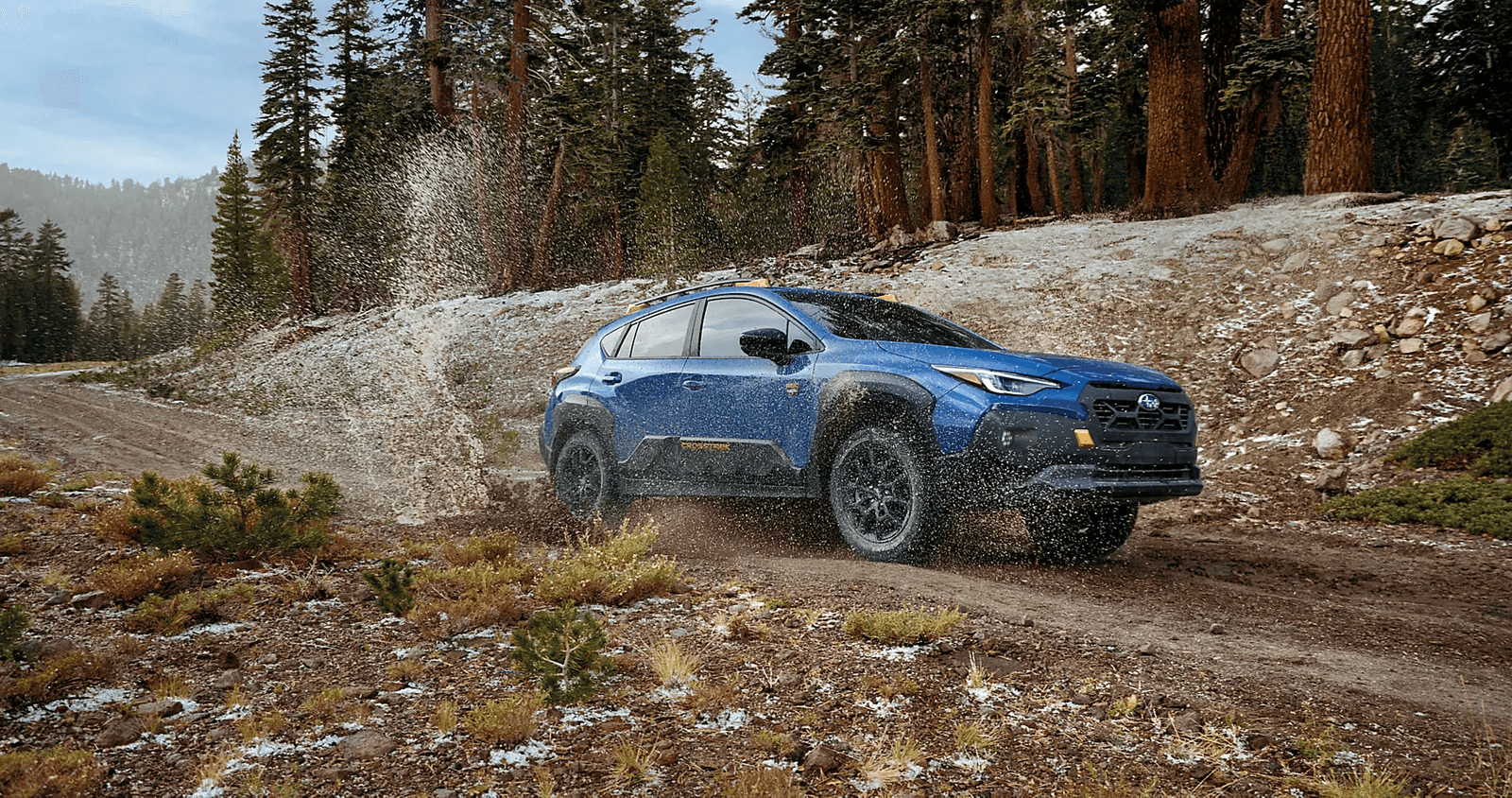
A Subaru Crosstrek Wilderness driving through wet, splashing terrain, demonstrating symmetrical all-wheel-drive traction. Image courtesy of Subaru of America.
01The five monsoon realities
Your Subaru is genuinely good in the rain. Here's where it helps, and where you take over.
You bought a Subaru partly for weather like this, and that instinct is right. Symmetrical AWD handles wet pavement, including that first greasy slick after a dry spell, better than almost anything else on the road.
It helps to know where that confidence ends, too. AWD does a lot on wet pavement, and it also has limits worth respecting: it won't clear a haboob's near-zero visibility, it isn't built to cross a flooded wash, and it can't make up for tires worn past 4/32-inch. Knowing where those limits are is what keeps a good drive uneventful.
So this page separates what your Subaru actually does in a monsoon from what it can't, and gives you the eight-item check that keeps you on the safe side of both. It takes about ninety minutes here before the season peaks.
What changes in Yavapai County during monsoon
Monsoon season window
June 15 to September 30 · peak storms July through mid-September
Symmetrical AWD on wet pavement
Standard on every 2026 Subaru except BRZ · always-on, mechanical
First-rain traction
20-to-30 minute slick film as oil and rubber residue lifts off dry pavement
Tire tread minimum for monsoon
4/32-inch · below that, hydroplane regardless of vehicle
Forester ground clearance
8.7 in non-Wilderness · not enough for moving flooded-wash crossings
Outback / Crosstrek ground clearance
9.5 in Outback · 9.3 in Crosstrek per Subaru USA
Moving water depth that floats a sedan
12 inches · 6 inches can sweep most passenger vehicles off course
Wiper-blade interval in Arizona
6 to 12 months · vs 18-month national average due to UV exposure
EyeSight in heavy rain
Pre-Collision Braking, ACC, Lane Keep Assist reduce or disengage
Arizona Stupid Motorist Law (ARS 28-910)
Rescue costs typically $200 to over $2,000 per incident
60-second readiness check
Is your Subaru ready for the monsoon?
A quick self-check, not an inspection. Whatever it flags, our techs confirm it on the service drive before any work.
02What happens in Yavapai County
What a Yavapai monsoon actually brings.
The monsoon pulls Gulf moisture into Arizona starting in late June. Thunderstorm activity peaks through August, then tapers off in September, per the National Weather Service Flagstaff forecast.
Flash flooding in washes and arroyos. Storms that drop 1 to 3 inches of rain in 30 minutes are common at monsoon peak. Water collects fast in the dry washes, Granite Creek through Prescott, the Verde tributaries, the arroyos off Iron Springs and Senator Highway. A wash can go from bone-dry to 3 feet of moving water in under 15 minutes.
Microbursts and outflow boundaries. Sudden downdrafts from thunderstorms produce local wind events, gusts of 60 to 80 mph. On open Yavapai County highway, that is enough to push a vehicle off the road or roll a taller one.
Dust storms (haboobs). Strong outflow winds carry desert dust in dense walls that drop visibility to near-zero in seconds. Haboobs are more common in the Phoenix and Tucson metros than at Prescott elevation, but Yavapai County sees them on Williamson Valley Road and the south-county routes toward Highway 89A south of Yarnell.
Lightning and hail. Yavapai County records more than 20 days per year with measurable lightning during monsoon season. Hail to dime-size is common; quarter-size hail occurs in the strongest cells.
During monsoon season, the math changes. Any given drive can include a sudden 15-minute stretch of zero visibility, a flooded wash, or a microburst. AWD helps with the wet pavement. It does nothing for a moving flooded wash, and no passenger vehicle is built to cross one.
Before you head out
Monsoon storms build fast in the afternoon. Check the live Yavapai County forecast before a drive, and watch the precipitation and wind panels, not just the temperature.
Subaru of America explains how Symmetrical All-Wheel Drive shifts power to the wheels with traction, the same behavior that steadies a Subaru on wet monsoon pavement. Video courtesy of Subaru of America.
Where AWD hands off to good judgment
A flooded wash is one place to rely on judgment over any AWD system or ground clearance.
Moving water carries real force. About six inches is enough to push most vehicles off course, and a foot can float a sedan. Subaru's 8.7 to 9.5 inches of ground clearance is meant for the trail, not for crossing a wash. On wet pavement AWD is a genuine advantage; at a flooded wash, the safe choice is simply to wait or route around.
03Does Subaru AWD help on wet roads
Where Symmetrical AWD helps on wet roads and in the rain.
Subaru's Symmetrical All-Wheel Drive system is standard on every 2026 Subaru passenger vehicle except the BRZ sports car, per Subaru USA. The Lineartronic CVT models use Active Torque Split AWD with a standard 60:40 front-to-rear torque split, biased to send more power to whichever axle has more traction. Always-on, mechanical.
First-rain traction. Weeks of dry pavement build up an oil-and-rubber film. The season’s first rain lifts it into a slick that lasts 20 to 30 minutes before it washes away. Through that window, Symmetrical AWD drives all four wheels; a front-wheel-drive vehicle drives only two.
Standing-water handling at highway speed. When the front tires hit a 1-inch-deep standing-water patch at 55 mph, a front-wheel-drive vehicle loses traction at both drive wheels simultaneously. A Subaru AWD vehicle retains rear-wheel traction, which keeps the vehicle pointed in the direction of travel and reduces aquaplane severity.
Crossover-to-shoulder recovery. Say the right-side wheels drop off onto a soft shoulder, common on the back-country routes during heavy runoff. Symmetrical AWD pulls the vehicle back onto pavement more reliably than a front-wheel-drive recovery does.
What Subaru AWD does NOT do is enable a vehicle to drive safely through a flooded wash. Extra ride height does not change that math either. Subaru ground clearances (8.7 in Forester non-Wilderness, 9.5 in Outback, 9.3 in Crosstrek per Subaru USA) are not enough to safely cross moving water at typical monsoon flash-flood depths.
Always-onStandard on every 2026 Subaru (except BRZ)
Symmetrical AWD
Full-time mechanical AWD with the layout balanced along the vehicle centerline because the Boxer engine sits low and flat. No engagement delay because there is no engagement to begin with.
Oil and rubber residue lifts off dry pavement during the first heavy rain of the season and floats on the surface for 20-30 minutes before washing away. Symmetrical AWD drives all four wheels through this window, where FWD drives only two.
A 1-inch-deep standing-water patch at highway speed loses both drive wheels on a FWD vehicle. A Subaru retains rear-wheel traction, which keeps the vehicle pointed in the direction of travel and reduces aquaplane severity.
Per Subaru USA: Forester non-Wilderness 8.7 in, Outback 9.5 in, Crosstrek 9.3 in. Ground clearance helps on broken pavement and soft shoulders. Ground clearance alone does NOT protect a vehicle from flash-flood currents.
Standard on Forester Wilderness, Outback Wilderness, and Crosstrek Wilderness. They handle monsoon conditions as well as the all-season fitment, with added grip on the back-country routes where the asphalt ends.
Drop the right-side wheels onto a soft shoulder, common on Iron Springs and Senator Highway in heavy runoff, and AWD pulls back onto pavement more reliably than FWD does.
Schedule a same-day pre-monsoon service appointment.
The Findlay Subaru Prescott service team runs an 8-item pre-monsoon checklist in about 90 minutes. Tread depth, wiper blades, washer fluid, headlight aim, brake fluid moisture, battery, cabin filter, and tire pressure on all four wheels including the spare.
We recommend replacing tires at 4/32-inch of tread before the season starts in mid-June, not running them down to the 2/32-inch legal minimum. That follows IIHS and Tire Industry Association guidance, and our team measures tread on every May and June visit.
Tread depth and standing-water performance.
Tread depth is what actually clears standing water. Here is how it falls off:
10–11/32-inch (new) · clears standing water with room to spare
4/32-inch · hydroplane onset speed drops 15 to 25 percent versus new
2/32-inch (legal minimum) · badly compromised, not suitable for monsoon driving
What ships standard on your Subaru.
The all-season tires that come standard on Forester Premium and Limited handle monsoon conditions well within the 4/32-inch tread-depth threshold. The Yokohama Geolandar all-terrain tires standard on the Forester Wilderness, Outback Wilderness, and Crosstrek Wilderness handle monsoon conditions just as well, with extra grip on the back-country routes where the asphalt ends.
What we measure on every pre-monsoon visit.
We measure tread depth on every May and June visit and flag owners whose tires won’t safely handle a monsoon. If you drive year-round, replacing at 4/32-inch before mid-June is the safe call. The small cost difference over waiting for the 2/32 legal minimum buys a real safety margin.
We measure tread on every spring service, and when a Yavapai County customer is at 4/32 in May, we flag it. Running monsoon season on 2/32 in a Subaru carries the same hydroplane risk as running it on 2/32 in a front-wheel-drive sedan. AWD does not change tire physics.
How the Findlay Subaru Prescott service team handles tread before monsoon season
05Visibility, wipers, and headlights
Four visibility items to check before the season.
In Arizona's UV environment, the wiper-blade replacement interval runs 6 to 12 months, faster than the 18-month national average. Clear glass matters more than most drivers think in a monsoon cell: EyeSight is a backup system in heavy rain, never the primary one.
Visibility item
Pre-monsoon targetBefore mid-June
Service-drive checkWhat we look for
Why it mattersDuring the storm
Wiper blade condition
Replace at 6-12 months in AZ
Streak patterns, skip in light rain
Streaks become a hazard in heavy rain
Windshield washer reservoir
Topped up year-round
Especially late May before season
Dust storms make wipers alone insufficient
Headlight aim & lens clarity
≥ 70% transparency
Polish or replace below threshold
Cloudy lenses cut light output in heavy rain
EyeSight stereo-camera
Functional, calibrated
Verify no fault codes
Reduces or disengages in heavy rain (warning shown)
Wiper blade condition. Wiper blades that streak or skip in light rain become a serious safety hazard in heavy monsoon rain. Blades wear out faster here than the packaging suggests. The replacement interval in Arizona's UV environment runs 6 to 12 months, faster than the 18-month national average.
Windshield washer fluid reservoir full. Dust accumulation on the windshield during monsoon dust storms makes wiper operation alone insufficient. Keep the washer reservoir topped up year-round, particularly in late May before the season starts.
Headlight aim and lens clarity. Cloudy or pitted headlight lenses cut real light output during a heavy monsoon storm, right when you need the beam most. We check lens clarity at the service drive and recommend polish or replacement when it drops below 70 percent transparency.
EyeSight in heavy rain. The stereo camera sits at the top of the windshield, so it struggles when the wipers can’t keep the glass clear. In heavy rain, features like Pre-Collision Braking and Lane Keep Assist reduce or disengage, with a dashboard warning. Treat a monsoon storm as fully manual driving, with EyeSight as a backup, not the primary system.
A quick note worth knowing: under Arizona's Stupid Motorist Law (ARS 28-910), a driver who goes around a closed-road barrier into a flooded roadway and needs rescuing can be billed for that rescue, typically $200 to over $2,000. The simple takeaway is that a posted closure is always the cue to find another way around.
1. Give a flooded wash a wide berth, whatever you drive.
Once a road is officially closed for flooding, with the barriers and signs DPS or county crews put out, it's best to turn around and find another route. Moving water is the one thing AWD and ground clearance can't help with, so this is the simplest call to make.
2. In a haboob, choose a parking area over the shoulder.
Drivers with reduced visibility tend to follow tail lights, so the shoulder can draw traffic toward you. The easier move is to take an exit into a parking area. Once you're stopped, switch off all your lights, including the parking lights, and wait for the dust to pass.
3. Let a wash settle before you cross, even at low water.
Depth and flow can change quickly. A wash that is 6 inches deep at 1:00 p.m. can be 3 feet deep at 1:15 p.m. once the storm cell upstream releases, so a few minutes of patience is worth it.
4. In heavy rain, lead with your own driving, EyeSight second.
Pre-Collision Braking, Adaptive Cruise Control, and Lane Keep Assist ease off when the camera's view drops in heavy rain. Treat EyeSight as a helpful backup and stay hands-on through the storm.
5. Skip bridges and dips when you need to pull over.
Both sit in flash-flood and microburst zones, so if you need to stop, it's better to carry on to higher, open ground first.
ARS 28-910
Arizona Stupid Motorist Law
$200 to $2,000+
Typical rescue liability
15 minutes
Wash rises from dry to 3 ft
60-80 mph
Microburst gust range
Microburst awareness. Sudden downdraft outflow can push a Subaru off the road or roll a high-profile vehicle on open Yavapai County highway segments. If wind gusts arrive suddenly with a thunderstorm, slow down and find a safe exit rather than continuing through the storm cell.
Hail behavior. Dime-size hail is common here; the strongest cells can drop quarter-size stones. If hail begins, pull off where you can and wait it out rather than driving on under impact.
For any pre-monsoon question, or to book a same-day appointment, schedule online. Our Subaru Certified Master Technicians (Nickolas Popov, Justin Furber, David Greenwood) run the pre-monsoon checklist.
07Pre-monsoon service checklist
Eight items. Ninety minutes. One visit.
The Findlay Subaru Prescott pre-monsoon service checklist runs in 8 items and typically completes in 90 minutes at our service drive. Pre-monsoon appointments are most heavily booked from late May through early July, so schedule online before peak demand.
The eight items.
1. Wiper blade condition · replace if older than 6 months or showing streak patterns
2. Windshield washer fluid level · topped up year-round, particularly in late May
3. Tire tread depth · 4/32-inch minimum recommended; replace if lower before monsoon
4. Tire pressure · all four wheels including the spare
5. Headlight aim and lens clarity · polish or replace below 70% transparency
7. Battery condition · Arizona heat shortens battery life; replace if approaching 4 years
8. Cabin air filter · dust accumulation reduces airflow; replace annually in Arizona
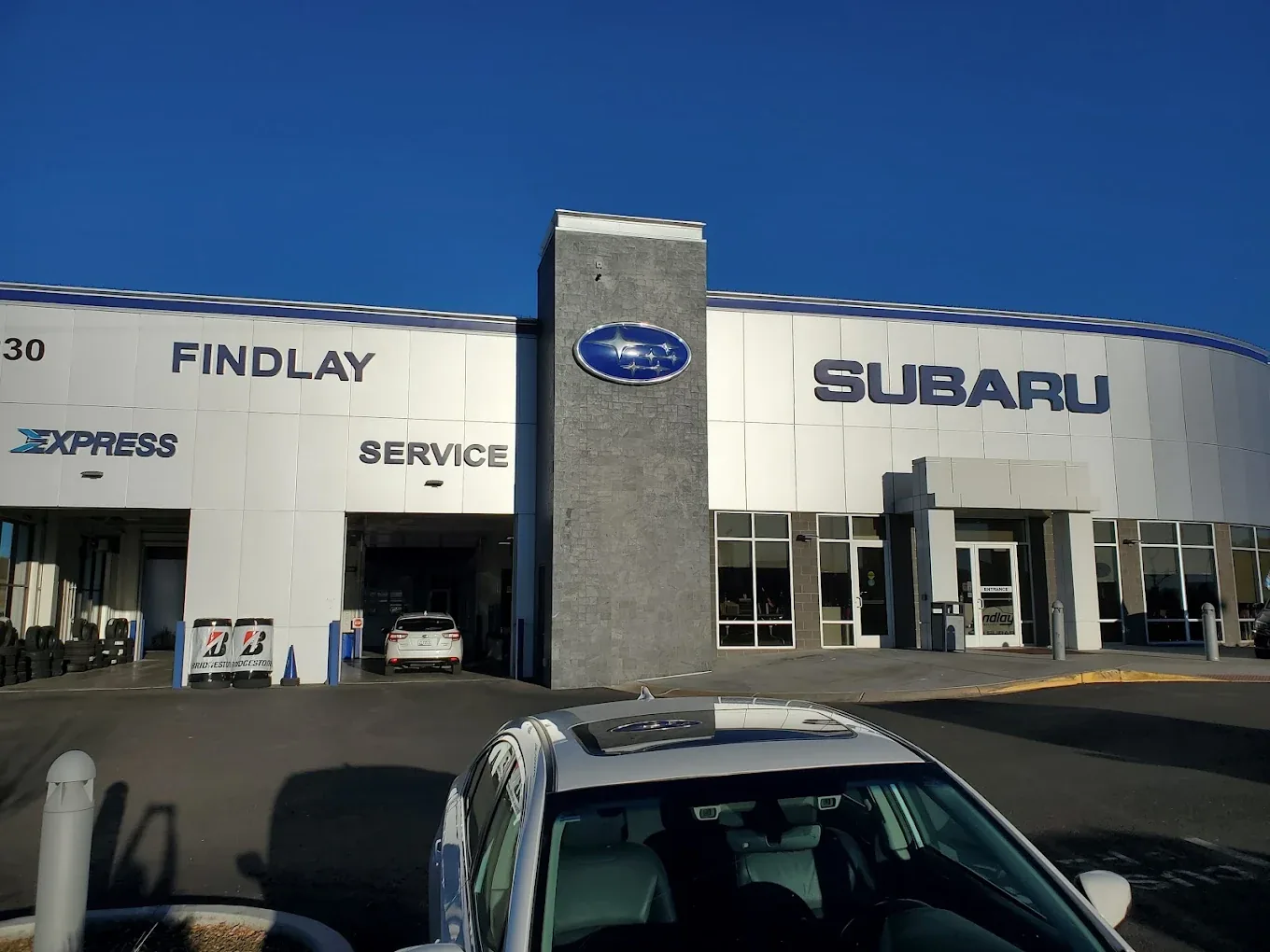
Our Express Service drive at 3230 Willow Creek Road, where the eight-item pre-monsoon check is done in about 90 minutes.
What models we have inspected.
Our Subaru Certified Master Technicians run this check across the whole lineup, on Foresters, Outbacks, Crosstreks, Ascents, and Imprezas for Yavapai County owners on the back-country routes: 89A, Iron Springs Road, Senator Highway, and Williamson Valley Road.
When to book.
Peak storm activity in Yavapai County runs July through mid-September, per the National Weather Service Flagstaff forecast, so the smart move is a check in late spring. Pre-monsoon appointments book up fastest from late May through early July.
The service drive Yavapai County families call before the storms.
We're the Subaru store for Prescott, Prescott Valley, and the Quad Cities. Before monsoon season, the same certified techs who know your Subaru run the eight-item check that helps you head into the season with confidence.
No commission
Advisors are paid the same whatever you drive off in, so the advice stays about your Subaru.
Price in writing
The out-the-door number up front, no hidden fees.
Certified Subaru service
Factory-trained techs and Genuine Subaru parts, Solterra EV included.
Buy from home
Value your trade, finance, and schedule delivery online.
Yes. Symmetrical All-Wheel Drive drives all four wheels at once, so on wet pavement it keeps grip that a front-wheel-drive vehicle loses when its two drive wheels slip. Subaru's Lineartronic CVT models use Active Torque Split AWD with a standard 60:40 front-to-rear split, biased toward whichever axle has more traction, per Subaru USA.
The benefit shows up most in standing water at highway speed and during the first 20 to 30 minutes of the season's first rain, when an oil-and-rubber film floats on the surface. AWD is a traction advantage, not a substitute for good tires or for slowing down.
Is Subaru AWD good in monsoon rain in Arizona?
Yes. Subaru's Symmetrical All-Wheel Drive system, standard on every 2026 Subaru except the BRZ sports car, provides measurably better traction on wet pavement than most front-wheel-drive crossovers. The advantage is most noticeable during the first 20 to 30 minutes of the season's first heavy rain, when oil and rubber residue lifts off the dry pavement.
It also helps in standing water on the highway. The one place to rely on judgment over AWD is a flooded wash, since no passenger vehicle is meant to cross moving water; there, the safe move is simply to wait or route around.
How deep is too deep to drive a Subaru through water?
A good rule of thumb: steer clear of standing or moving water more than about 6 inches deep in any passenger vehicle. That is roughly where moving water starts to push a car off course. By a foot, it can float a sedan.
Subaru's 8.7 to 9.5 inches of ground clearance is built for the trail. At a flooded wash, the easy call is to wait or route around.
What is the Arizona Stupid Motorist Law?
Arizona Revised Statutes 28-910 (commonly called the Stupid Motorist Law) means a driver who goes around a closed-road barrier into a flooded roadway and needs rescuing can be billed for that rescue.
It applies to roads officially closed for flooding, usually marked with barriers or signs from the Arizona Department of Public Safety or county crews. A rescue typically runs $200 to over $2,000. The simple takeaway: a posted closure is always the cue to find another way around.
When does monsoon season start and end in Yavapai County?
Per the National Weather Service Flagstaff regional forecast, Arizona's monsoon season runs from June 15 through September 30 each year. Peak storm activity in Yavapai County typically runs July through mid-September. Pre-monsoon service appointments at Findlay Subaru Prescott are most heavily booked from late May through early July; schedule online before peak demand.
How often should I replace wiper blades in Arizona?
We recommend replacing wiper blades every 6 to 12 months in Arizona, faster than the 18-month national average, because UV exposure degrades the rubber faster here. Our pre-monsoon service checklist includes a wiper-blade inspection and replacement if the blades show streaking, skipping, or visible rubber degradation.
Does Subaru EyeSight work in heavy rain?
EyeSight uses a stereo camera at the top of the windshield, so in heavy rain its view is reduced, and features like Pre-Collision Braking and Adaptive Cruise Control ease off or pause with a dashboard note. It's a helpful backup year-round; in a monsoon storm, it's best to lead with your own driving and stay hands-on.
Written and reviewed by the Findlay Subaru Prescott sales and service team.
Subaru AWD architecture, ground clearances, and EyeSight feature documentation verified against Subaru USA Owner Resources (2026 specifications). Tire tread-depth thresholds and hydroplane guidance cross-referenced against IIHS Vehicle Ratings and Tire Industry Association published guidance. Monsoon season window and flash-flood warning thresholds per the National Weather Service Flagstaff regional forecast. Arizona Stupid Motorist Law per Arizona Revised Statutes 28-910.
Local observations reflect Findlay Subaru Prescott service-department experience across multiple monsoon seasons in Yavapai County, including pre-monsoon inspections on Foresters, Outbacks, Crosstreks, Ascents, and Imprezas across the back-country routes (89A, Iron Springs Road, Senator Highway, Williamson Valley Road).
Book your pre-monsoon service. Same day. Eight items. Ninety minutes.
Findlay Subaru Prescott · 3230 Willow Creek Road, Prescott AZ 86301. Pre-monsoon appointments are most heavily booked from late May through early July; call ahead.